The Hawaii dollar coin is usually searched for by price. That is not the best entry point. The 1883 issue makes more sense through history, design, and survival. Value comes after that.
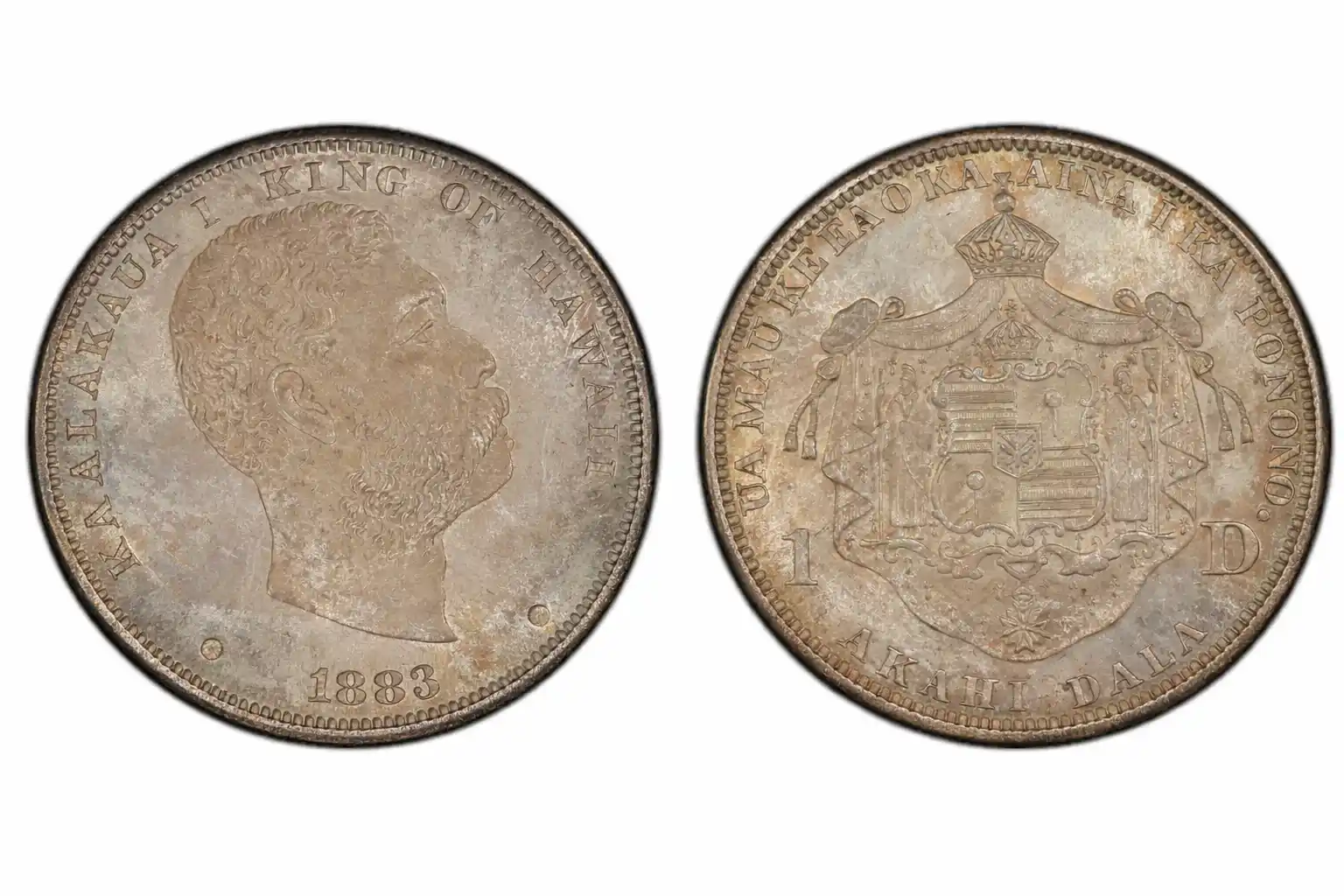
The coin belongs to the Kingdom of Hawaii. It shows King Kalākaua I on the obverse and the Hawaiian arms on the reverse. It is a silver dollar, but it is not just another silver dollar. It is a short-lived kingdom issue with a distinct collector market.
What the Coin Is
The 1883 Hawaii dollar is part of the Kalākaua coinage. It was made for Hawaii and matched the general size and monetary logic of the U.S. silver dollar.
Basic facts
| Parameter | Detail |
| Date | 1883 |
| Country | Kingdom of Hawaii |
| Ruler | Kalākaua I |
| Composition | .900 silver |
| Weight | 26.73 g |
| Diameter | 38.10 mm |
| Actual silver weight | 0.7734 troy oz |
| Mintage | 500,000 |
These numbers matter, but they do not explain the full coin. The main appeal is not only the silver content. The coin is collected as a kingdom issue, a historical type, and a survival story.
Why the Coin Exists
The coin was part of a broader monetary program under King Kalākaua. Hawaii wanted practical silver coinage for local use. The issue also carried political meaning. A national coinage showed sovereignty, order, and royal identity.
That is why the design matters so much. This is not a generic trade dollar. It is a state coin with a clear local purpose.
Why collectors pay attention to it
- Kingdom issue
- Short series
- Strong historical identity
- Silver dollar format
- Later redemption and melting
- Wide price spread by condition
The Design
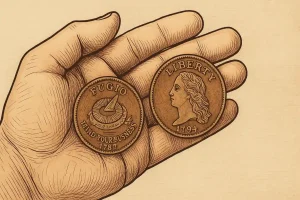
The obverse shows a right-facing portrait of King Kalākaua I. The reverse carries the crowned Hawaiian arms. This is one of the reasons the coin holds attention even in lower grades. The design is not plain. It has presence.
Obverse details collectors check
- Portrait sharpness
- Hair detail
- Cheek and jaw wear
- Lettering clarity
- Rim quality
Reverse details collectors check
- Crown detail
- Shield lines
- Wreath sharpness
- Motto area
- Field quality
Collectors do not study this coin only through grade. They also study how the design survives. A technically decent coin can still look weak if the surfaces are flat or the strike looks dull.
Circulation and Survival
This coin circulated. It was not a souvenir issue. That part matters because many buyers treat the 1883 Hawaii dollar like a romantic historical piece with no commercial life. That is not correct. It was made for use.
The later history changed the market. Large numbers were redeemed and melted after Hawaii moved away from this coinage. That is one reason the surviving population is much smaller than the original mintage suggests.
Why survival matters
- Many pieces disappeared through melting
- Many survivors were cleaned
- Some were mounted or damaged
- Original coins became harder to find
- Problem-free examples stand out more than mintage alone suggests
This is one of the central points of the coin. A mintage of 500,000 sounds comfortable. The real collector pool is much smaller once cleaning, damage, and altered pieces are removed from the picture.
History First, Value Second
This order matters. Many collectors start with the wrong question: “How much is it worth?” The better first question is: “What kind of coin is this?”
The 1883 Hawaii dollar is not collected only because it is silver. It is collected because it sits at the meeting point of Hawaiian history, U.S. minting links, and strong design.
Three ways collectors read this coin
- As a kingdom issue
- As a silver dollar-type coin
- As a market item with a strong value spread
The first view is the strongest one. The price makes more sense after that.
What Drives Value
Silver content gives the coin a base. The collector value does the rest. On this issue, price is shaped more by surfaces and originality than by melt value.
Main price drivers
| Factor | Weak Example | Strong Example | Effect On Value |
| Grade | Worn | Au Or Mint State | Strong |
| Surfaces | Cleaned, Damaged | Original | Very Strong |
| Eye Appeal | Dull, Flat | Balanced, Attractive | Strong |
| Rims | Bumps, Filing | Clean Rims | Moderate To Strong |
| Strike Look | Soft | Sharper Detail | Moderate |
| Silver Content | Same | Same | Floor Only |
This table shows the real structure. Silver is important, but it does not explain why one coin sells for a modest collector price, and another jumps much higher.
What usually hurts value
- harsh cleaning
- mounting marks
- scratches in the fields
- rim filing
- bent planchets
- dull grey surfaces without life
What usually helps value
- original skin
- even tone
- honest wear
- stronger detail in the portrait and arms
- clean rims
- better visual balance
Lower-Grade Coins and Better Coins
A circulated 1883 Hawaii dollar still has collector demand. It fills a type slot. It has silver. It carries the history of the issue. That keeps entry-level demand steady.
The better market begins when the coin becomes cleaner and more original. This is where the gap widens.
General market logic
- Lower circulated pieces: collected for type and history
- Mid-grade coins: stronger interest if original
- AU coins: often, where the market becomes more selective
- Mint State coins: much scarcer and much more competitive
This is not a date where the price rises only because of the year. The market is more visual than that. Surfaces decide a lot.
How to Read the Coin Before Checking the Price
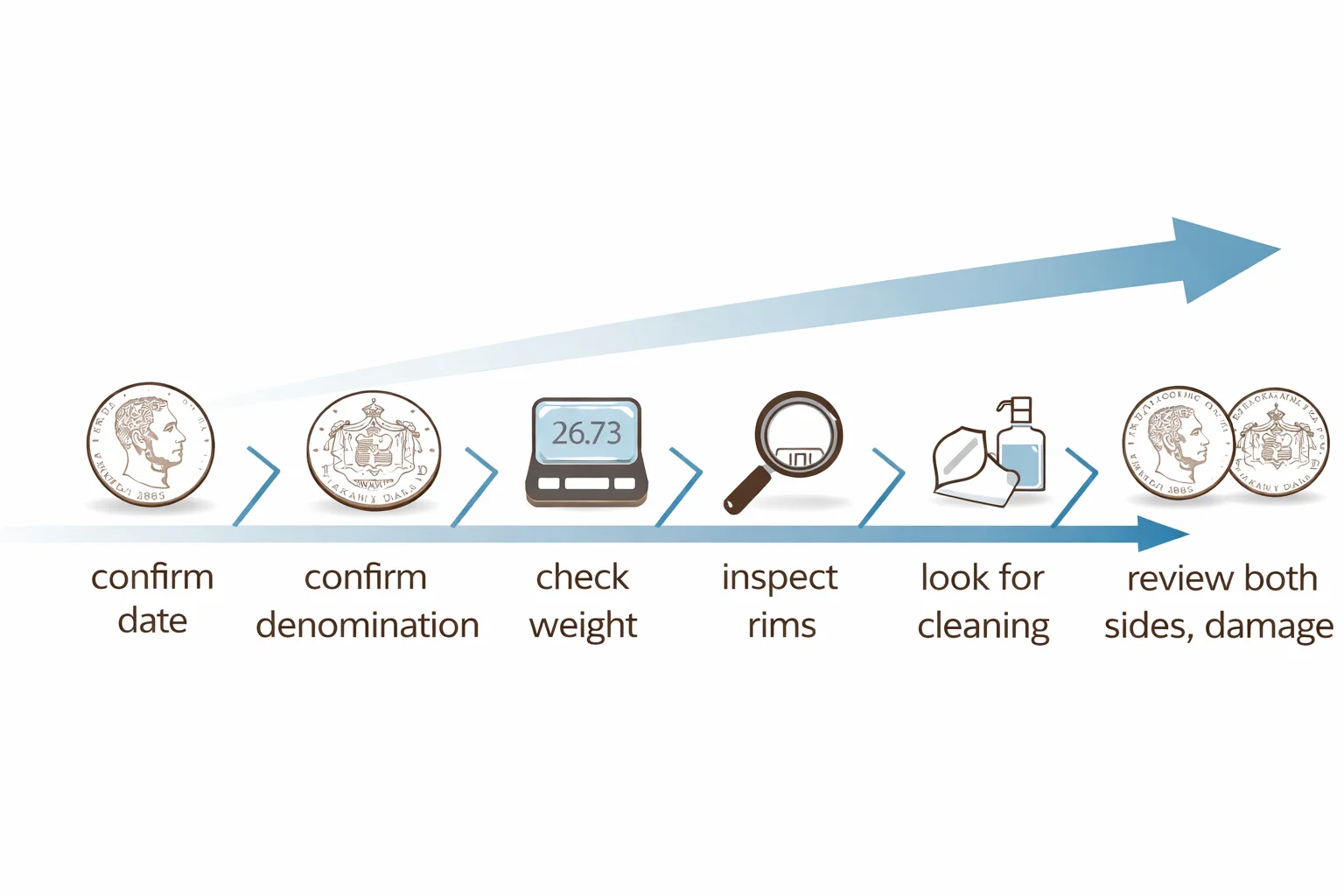
Collectors should not jump from the date to a price chart. A quick first review gives better results.
First review checklist
- Confirm the date
- Confirm the denomination
- Check the weight if needed
- Inspect the rims
- Look for signs of cleaning
- Check both sides under soft light
- Separate honest wear from damage
This is where a coin value checker app can help at the first stage. It can help confirm the type, metal, and general value lane before you compare auction levels or dealer prices. That is useful when a collector is sorting Hawaiian coins, world silver dollars, or mixed inherited material.
Practical Buying Points
This coin has a few traps. Most of them are surface-related.
Before buying, check these points
- Is the coin cleaned?
- Are the rims intact?
- Does the portrait still hold natural detail?
- Do the reverse fields look original?
- Is the coin evenly toned or oddly bright?
- Does the price fit the actual condition?
A cleaned coin can still be collectible. It should not be priced like an original piece. That is where many weak purchases happen.
Type Appeal vs Silver Appeal
Some collectors buy the coin for the silver. That is the weaker reason. The silver content is real, but many other coins offer easier silver exposure. The 1883 Hawaii dollar works best as a historical collector coin that also happens to contain silver.
Best reasons to own one
- kingdom coinage
- distinct portrait type
- Hawaiian historical interest
- silver dollar size
- strong type-coin appeal
Weaker reasons to buy one
- silver alone
- mintage alone
- “old coin” logic
- headline auction prices without condition context
This split is important. The coin becomes easier to judge once silver stops being the main lens.
Where an App Can Help
A free coin identifier and value app is useful before the final decision, not instead of it. The best use is fast sorting and first-pass review.
Coin ID Scanner fits that role well. It identifies coins from photos and builds a structured coin card with country, metal, weight, diameter, and value range. Smart Filters help narrow similar types. The built-in AI assistant helps with quick numismatic questions while sorting a coin into the right category. That is useful when the goal is to separate a historical dollar from look-alike silver pieces before deeper checking.
The app is not the final word on originality or market level. It helps with the first screen. That is the right way to use it.
Who This Coin Suits Best
Not every collector approaches the 1883 Hawaii dollar the same way.
Good fit for
- Hawaiian coin specialists
- U.S.-linked historical coin collectors
- silver dollar type collectors
- buyers who care about originality
- collectors building a strong world silver type set
Less ideal for
- buyers who want bullion only
- people who ignore surface problems
- collectors who chase auction headlines first
This is a coin that rewards patience. It looks simple at first. It is not simple once a condition enters the discussion.
Conclusion
The 1883 Hawaii dollar is easier to understand when history comes first. It is a kingdom issue with a clear portrait type, a real circulation story, and a survival pattern shaped by redemption and melting. That is why collectors still want it.
Value matters. It just comes second. The better reading is simple: learn the coin, study the surfaces, then judge the price. That order gives better results on this issue than price-first collecting ever will.